

In a world where fitness trackers have become the modern-day equivalent of a trusty sidekick, connecting a Fitbit to an iPhone is like unlocking the secret to a healthier lifestyle. Imagine having your very own digital cheerleader, ready to motivate you with every step, heart rate, and calorie burned. But wait—before you can bask in the glory of your fitness achievements, you need to get that Fitbit talking to your iPhone.
Understanding Fitbit and iPhone Compatibility
Fitbit devices are compatible with various iPhone models, enhancing users’ fitness tracking experience. To access all features, users must have their iPhone running iOS 13 or later. Most recent Fitbit models work seamlessly with newer iPhones. Additionally, the Fitbit app available on the App Store ensures an optimal connection.
Functionality between the Fitbit and iPhone includes real-time notifications, fitness tracking, and goal monitoring. Notifications from the iPhone like calls, texts, and calendar alerts sync directly to the Fitbit, allowing users to stay connected without checking their phones constantly.
Battery life plays an important role in compatibility. Fitbit devices maintain lengthy battery life, yet pairing efficiency may decrease if not charged adequately. Ensuring the Fitbit is charged enhances functionality and connection stability.
Syncing the devices requires Bluetooth. Users should enable Bluetooth on their iPhone before attempting to pair the Fitbit. A stable connection improves real-time data transfer and overall user satisfaction.
Accessibility for users with different needs is available through Fitbit’s features. The device supports various fitness goals, from tracking steps to monitoring heart rate, catering to diverse lifestyles.
User reviews indicate general satisfaction with compatibility between Fitbit and iPhone. Many users report smooth synchronization processes, contributing to maintaining an active and healthy lifestyle. Engaging with the Fitbit app enhances overall usability and provides essential insights into personal fitness data.
Preparing Your Devices
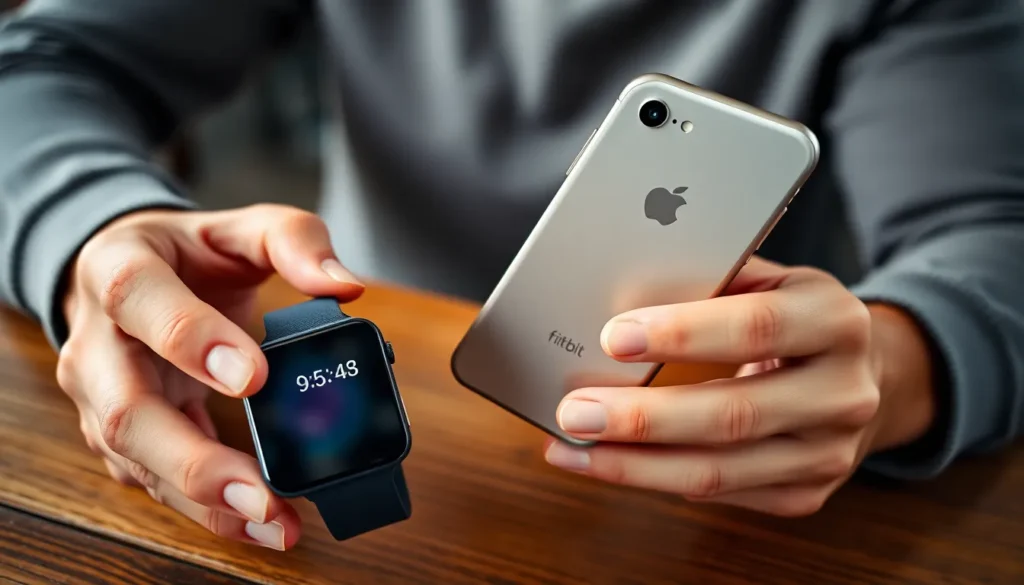
Before connecting a Fitbit to an iPhone, users must ensure both devices are ready for pairing. This preparation involves verifying the Fitbit model and confirming compatibility with the iPhone.
Checking Fitbit Model
Identifying the Fitbit model is essential for a successful connection. Fitbit offers various devices, including Charge, Versa, and Inspire series. Each model has specific features and compatibility with iPhones. Users should check their Fitbit model by looking at the device settings or the back of the tracker. Knowing the model helps in determining the firmware updates required for proper functionality. Users should visit the Fitbit website for detailed specifications and device support documentation.
Ensuring iPhone Compatibility
Compatibility between the iPhone and the Fitbit is crucial. iPhones must operate on iOS 13 or later to sync effectively with most Fitbit devices. Users can confirm their iPhone’s software version by navigating to Settings, then General, and selecting About. An updated iPhone enhances the overall experience, providing seamless synchronization with the Fitbit app. For the best performance, keeping the iPhone’s Bluetooth feature enabled ensures proper connection. Regular software updates on both devices lead to improved functionality and compatibility.
Downloading the Fitbit App
Downloading the Fitbit app is the first step to connecting a Fitbit to an iPhone. Users access the App Store on their iPhone for this purpose. Search for “Fitbit” in the search bar, then tap on the app in the results list. The app is free, ensuring easy access for everyone.
After finding the app, it’s critical to tap the “Get” button to initiate the download. Users may need to enter their Apple ID password or use Face ID or Touch ID for authentication. Wait for the app to install, and a notice will appear once the installation is complete.
Upon successful installation, locate the Fitbit app on the home screen. Open the app to create a Fitbit account or log in with existing credentials. Following this, users must provide necessary permissions, including access to location services and notifications, ensuring optimal functionality.
Connecting the Fitbit to the iPhone requires enabling Bluetooth on the phone. Navigate to the settings and turn on Bluetooth before proceeding. Once Bluetooth is activated, the app will guide users in pairing their Fitbit device.
It’s essential to allow the Fitbit app to send notifications for an enhanced user experience. Notifications deliver updates and reminders regarding fitness goals and accomplishments. Engaging with the app regularly unlocks insights into fitness data and overall progress, making it a vital addition to any health journey.
Connecting Fitbit to iPhone
Connecting a Fitbit to an iPhone enhances the user experience by providing seamless fitness tracking and notifications. Ensure both devices are ready for a successful pairing process.
Step-by-Step Instructions
- Download the Fitbit app. Search for “Fitbit” in the App Store, then tap “Get” to install.
- Create or log in to your account. Users must enter required information for synchronization.
- Enable Bluetooth. Open settings on the iPhone and ensure Bluetooth is activated.
- Pair the devices. Follow on-screen prompts in the Fitbit app to find the Fitbit device and establish a connection.
- Allow permissions. Grant necessary access for notifications and real-time updates to function properly.
Following these steps allows the Fitbit and iPhone to work together and track fitness goals effectively.
Troubleshooting Connection Issues
Check Bluetooth settings first. Turn Bluetooth off and on to reset the connection. Next, ensure that the Fitbit is charged adequately; low battery can disrupt pairing efforts. Restarting both devices can also resolve unexpected issues. If problems persist, updating the Fitbit app from the App Store often helps. Users should verify that both devices run compatible software versions. For further problems, uninstalling and reinstalling the Fitbit app frequently resolves technical glitches.
Syncing Data Between Fitbit and iPhone
Syncing data between a Fitbit and an iPhone enhances the user experience and optimizes fitness tracking. Users first need to ensure that Bluetooth is enabled on the iPhone. Engaging in the Fitbit app allows for seamless data synchronization, including steps taken, heart rate, and sleep patterns. Users must open the app regularly to allow the latest data to transfer.
Notifications play a crucial role in maintaining motivation. Users receive reminders for fitness goals and updates on daily achievements directly on their iPhone. Each time the Fitbit syncs, users benefit from real-time insights and can track their progress consistently.
Data transfers occur automatically when the Fitbit and iPhone stay within Bluetooth range. Users should also consider syncing manually if automatic syncing fails or if they want to check updates instantly. In cases of connectivity issues, users can troubleshoot by restarting their devices or reinstalling the Fitbit app.
To maximize battery life, a charged Fitbit ensures continued synchronization. Users will find that regular charging boosts the device’s performance and effectiveness. Reviewing sync history within the app enables users to analyze their data trends over time.
Syncing between a Fitbit and an iPhone involves enabling Bluetooth, regularly opening the app, and maintaining a charged device. Receiving notifications and taking advantage of the app’s features contribute to a comprehensive understanding of individual fitness journeys.
Connecting a Fitbit to an iPhone opens up a world of fitness tracking and health insights. With the right setup users can easily monitor their progress and stay motivated in their health journey. Ensuring compatibility and following the connection steps helps in creating a seamless experience. Regular engagement with the Fitbit app not only enhances usability but also provides valuable data for users to assess their fitness trends. By keeping both devices updated and charged users can maximize the benefits of this powerful combination. Embracing this technology empowers individuals to take charge of their health and achieve their fitness goals.


